

When your cat does not come home, it is hard to think clearly. The bowl stays full. The garden feels too quiet. You start wondering whether to wait, call, walk the streets or post online.
The first rule is simple: start close. Many missing cats are not far away at the beginning. They may be hiding nearby, trapped in a shed, under a deck, inside a garage or frozen in a place they know.
Why the search often starts near home
Outdoor cats know their territory. When something interrupts their routine, they do not always run far. They may hide in the nearest safe-feeling place.
That is why the first search should not be a wide, panicked walk. It should be a slow, physical check of the places where a cat could actually be.
Look low. Look behind objects. Open doors. Ask neighbors to open doors too.
The first places to check
Start with places that are close, dark, quiet or easy for a cat to enter:
- Sheds and garden buildings.
- Garages and carports.
- Basements, cellars and storage rooms.
- Under decks, balconies and stairs.
- Hedges, bushes and wood piles.
- Greenhouses, barns and utility rooms.
- Neighboring gardens and courtyards.
Do not only call from the outside. A cat can be behind a closed door and still remain silent.
Why calling does not always work
Owners often assume: "If she hears me, she will answer." In reality, cats can stay silent when frightened, injured, trapped or overwhelmed.
This silence is one reason searches become so emotional. You may walk past the right place and not know it.
That is also why a last known area can be useful, but not complete. You still need to search the small, difficult spaces inside that area.
Why PetTracer searches differently
A last location is often only the starting point. PetTracer combines GPS location with radio near-search, so you can narrow the area first and then search more precisely when your cat may be close but hidden.
- Step 1GPS shows the search areaWhere the search begins.
- Step 2Radio helps close byAlso around garages, cellars and sheds.
- Step 3App and HomeStation tie it togetherOne system, not guesswork.
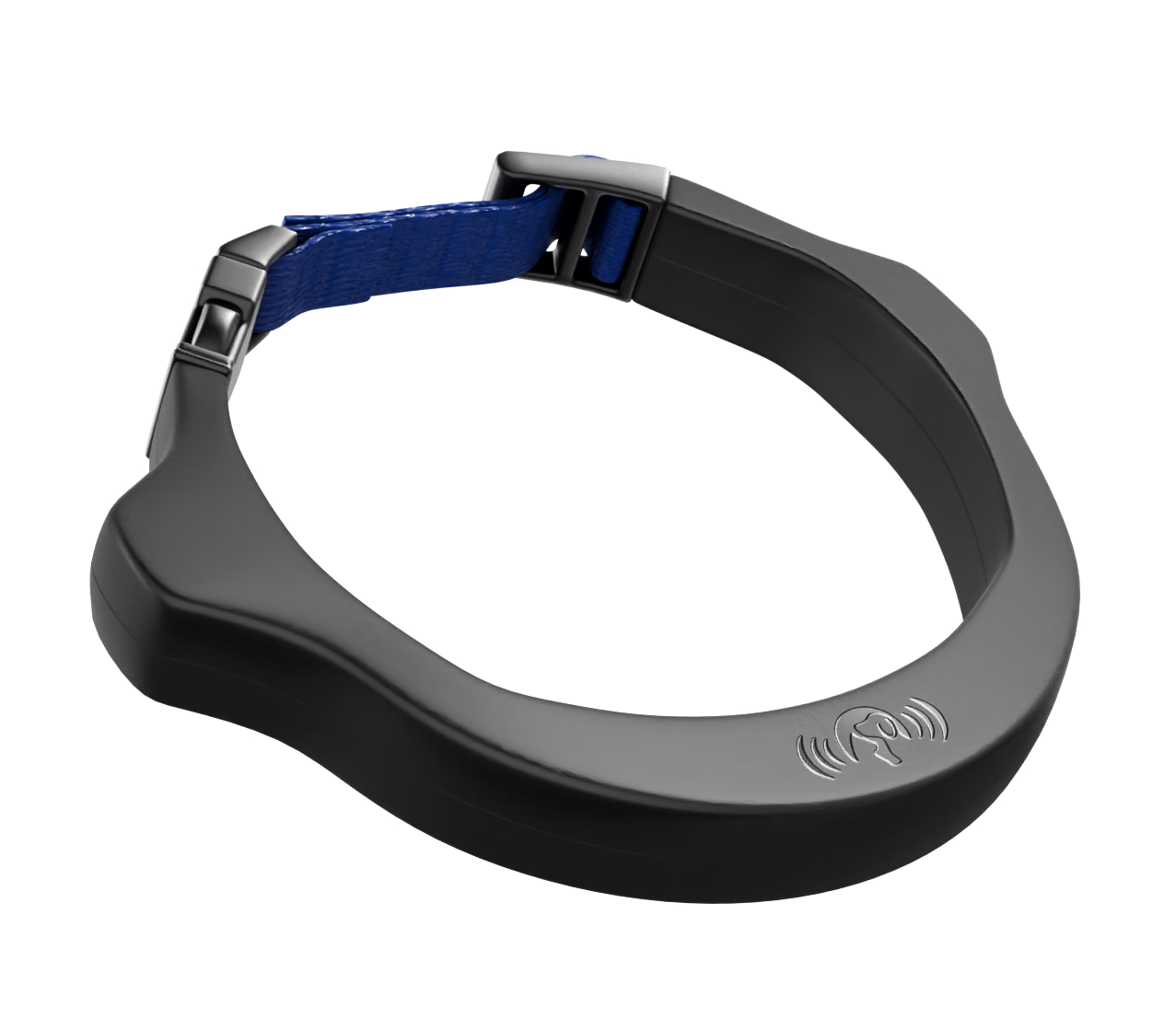
The search system for outdoor cats.
- Ultra-light collar made for outdoor cats
- GPS for the search area
- Radio for sheds, garages, cellars and dense cover
- Simple to use from the smartphone app
- 30-day money-back guarantee
Swiss Made · 30-day money-back guarantee
What a tracker can and cannot do
A tracker can help you avoid searching blindly. But different systems solve different problems.
An item finder may depend on nearby devices. A GPS tracker may show a location area. A GPS + radio search system is designed to support both phases: finding the area and then searching nearby.
PetTracer is built around that logic. GPS helps you understand where to start. Radio near-search helps when your cat may be close, hidden or silent.
Prepare before the next emergency
If your cat is missing right now, focus on immediate steps: search, ask neighbors, contact local vets and shelters, and post a clear missing-cat notice.
PetTracer is for preparation. It is the system you set up before the night you hope never comes.
FAQ
- Missing-cat study: https://pmc.ncbi.nlm.nih.gov/articles/PMC5789300/
- PetTracer product page: https://pettracer.com/de-eu/products/pettracer-full-set